Posts

Showing posts with the label Acute Pain

Acute Pain (Headache) related to Hyponatremia

Image
Nursing Care Plan - Acute Pain (Headache) related to Hyponatremia Hyponatremia is defined as a low sodium concentration in the blood. Too little sodium in the diet alone is very rarely the cause of hyponatremia, although it can promote hyponatremia indirectly and has been associated with Ecstasy-induced hyponatremia. Sodium loss can lead to a state of low blood volume, which serves as a signal for the release of anti-diuretic hormone (ADH). Signs and symptoms of hyponatremia include nausea and vomiting, headache, short-term memory loss, confusion, lethargy, fatigue, loss of appetite, restlessness, irritability, muscle weakness, spasms or cramps, seizures, and decreased consciousness or coma. Acute Pain : the head related to hyponatremia Purpose: After the act of nursing, pain is reduced / lost, Expected outcomes: Looks calm and relaxed. No complaints of pain. Exhibit a pain management. Intervention: 1. Assess vital signs. R / To determine the general condition o...

Appendectomy - Post Operative Nursing Care Plan - Acute Pain

Image
Appendicitis is inflammation of the appendix. Appendicitis commonly presents with right iliac fossa abdominal pain, nausea, vomiting, and decreased appetite. However, half to one third of persons do not have these typical signs and symptoms. Severe complications of a ruptured appendix include wide spread, painful inflammation of the inner lining of the abdominal wall and sepsis. An appendectomy is the surgical removal of the vermiform appendix. This procedure is normally performed as an emergency procedure, when the patient is suffering from acute appendicitis. However, a 12-hour delay had no effect on outcomes, in a large retrospective study. Appendecetomy- Post Operative Nursing Care Plan Acute pain related to the incision in the right lower quadrant abdominal postoperative. Purpose: Pain is reduced / lost. Expected outcomes: Relaxed and can sleep properly. Intervention: 1. Assess pain scale location, characteristics and report changes in pain appropriately. R /...

Acute Pain - Nursing Care Plan for Coronary Artery Disease

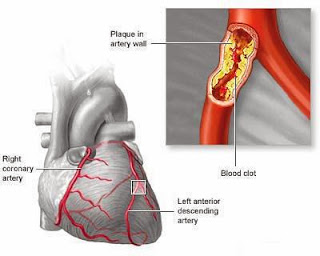
Nursing Diagnosis and Interventions for Coronary Artery Disease : Acute Pain Coronary artery disease is coronary artery pathological condition characterized by abnormal accumulation of lipids or fatty material and fibrous tissue in the walls of blood vessels resulting in changes in the structure and function of arteries and reduced blood flow to the heart (Brunner and Suddarth) The main cause of coronary artery disease is atherosclerosis. Atherosclerosis is the hardening of the artery walls. Arteriosclerosis characterized by the accumulation of fat, cholesterol, intimate layer of the artery. This heap is called atheroma or plaque. Nursing Diagnosis for Coronary Artery Disease : Acute Pain related to a decrease in myocardial blood flow, increased cardiac workload / oxygen consumption Outcomes: Stating chest pain disappeared / controlled. Demonstrating the use of relaxation techniques. Showed reduced tension, relaxed, easy to move. Interventions: 1. Monitor / record t...

Nursing Care Plan for Acute Pain (Impaired sense of comfort)

Image
Definition of Pain Pain is defined as a condition that affects a person's mind and the extensions if someone ever experienced. Pain means lead to feelings and reactions that are less fun. However, we all realize that the pain is often useful, among others, as a sign of danger; a sign that there are unfavorable changes in man. Classification of Pain 1. Based on the source a. Cutaneous / superficial: the pain of the skin / subcutaneous tissue. Usually burning. Example: exposed tip of a knife or scissors. b. Deep somatic / pain in: pain that arises from the ligament, cleanin. Blood, tendons and nerves, pain spreading and for longer than cutaneous. Example: joint sprain. c. Visceral (the internal organs): stimulation of pain receptors within the abdominal cavity, cranium and thoracic. It usually occurs due to muscle spasm, ischemia, tissue strain. 2. Based on the causes a. Physical: It could happen because of a physical stimulus. Example: fracture of the femur. b....

Nursing Care Plan for Chest Pain

Chest pain is feeling pain / bad that disrupt the chest area and often the pain is projected on the chest wall. Chest pain varies from person to person. It may feel like a sharp, stabbing pain or a dull ache. While chest pain may be a sign of a serious heart-related problem, it may also have other common, non–life-threatening causes. Causes of Chest Pain heart attack angina—chest pain due to blockages in the blood vessels leading to your heart pericarditis—inflammation of the sac around the heart myocarditis—inflammation of the heart muscle cardiomyopathy—heart muscle disease aortic dissection—a rare condition involving rupture of the heart’s main artery Signs and symptoms that commonly accompany chest pain are: Heartburn Headache Pain is projected to arms, neck, back Diaphoresis / cold sweat Shortness of breath Tachycardia Pale Skin Difficulty sleeping (insomnia) Nausea, Vomiting, Anorexia Anxiety, restlessness, focus on yourself Weakness Tense face, moaning...

Acute Pain Nursing Interventions for Peptic Ulcers

Nursing Care Plan for Peptic Ulcers Peptic ulcer is a condition in which the unbroken continuity of the gastric mucosa and extends below the epithelium. Mucosal damage does not extend all the way down epithelial erosion, although often considered as well as ulcers. (eg ulcers due to stress). Chronic peptic ulcer is different premises acute, because it has a scarring of the ulcer base. By definition, peptic ulcer can be found on any part of the gastrointestinal tract that is exposed to stomach acid sap, namely the esophagus, stomach, duodenum, and after gastroduodenal, too jejunum. Although the activity of peptic digestion by gastric an important aetiological factor, there is evidence that this is only one factor of many factors that play a role in the pathogenesis of peptic ulcer. Ulcer symptoms can disappear for days, weeks, or months and can even disappear only to look back, often with no identifiable cause. Many individuals have symptoms of ulcer, and 20-30% had perforation ...

Acute Pain related to Urinary Retention

Nursing Care Plan for Urinary Retention Urinary retention is a state of the buildup of urine in the bladder and does not have the ability to empty it completely. The signs and symptoms or clinical manifestation of the disease are as follows: Beginning with a slow flow of urine. Then there was polyuria, which becomes worse because the longer the emptying of the bladder is not efficient. Abdominal distention occurs due to dilatation of the bladder. Feels no pressure, sometimes painful and feel like urinating. In severe retention could reach 2000 -3000 cc. Nursing Diagnosis : Acute Pain Outcomes: Stating the pain is relieved / controlled. Shows relax, rest and increased activity appropriately. Intervention Assess pain, note the location, intensity of pain. Plaster drainage hose on the thigh, and a catheter in the abdomen. Maintain bed rest when indicated. Provide comfort measures Encourage use sitting soak, soapy to the perineum. Rational Provide information...

Acute Pain - Nursing Care Plan for Tonsillitis

Image
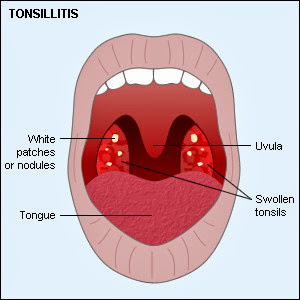
Acute tonsillitis is an acute inflammation caused by Beta-Hemolytic Streptococcal , Viridans streptococci and Streptococcus pyogenes , can also be caused by a virus. Etiology of Tonsillitis 1. Beta-Hemolytic Streptococcal Beta-Hemolytic Streptococcal is a gram-positive bacterium that can multiply in a healthy throat and can cause acute respiratory tract infections. 2. Streptococcus pyogenes Streptococcus pyogenes is a gram-positive bacterium that grows in a circular form long chains and lead group A streptococcal infection Streptococcus pyogenes is the cause of many important human diseases ranging from infection typically begins in the throat and skin. 3. Viridans streptococci Viridans streptococci has the unique ability dextran synthesis of glucose which allows them adhere to fibrin-platelet aggregates in damaged heart valves. 4. Influenza virus The influenza virus is an RNA virus of the family Orthomyxo Viridae (influenza virus). The virus is transmitted by the...

Nursing Interventions for Acute Coronary Syndrome: Acute Pain

Image
Nursing Care Plan for Acute Coronary Syndrome Acute coronary syndrome (ACS) is a cardiac emergency with clinical manifestations of chest discomfort or other symptoms due to myocardial ischemia. Acute coronary syndrome consisting of unstable angina pectoris, acute myocardial infarction accompanied by ST segment elevation. Patients with myocardial infarction without ST elevation. Acute coronary syndrome defined as a clinical manifestation of coronary artery disease. Coronary heart disease (CHD) is a major manifestation of the atherosclerotic process. Nursing Diagnosis : Acute Pain Defining characteristics: Saying pain verbally and non-verbally. Position to reduce pain. Movement to protect. Sleep disorders. Changes in appetite. Autonomic response in the autonomic changes in muscle tone. NIC Outcomes: Pain control. The level of comfort. Pain bullies. Pain level. NOC 1. Pain Management Perform a comprehensive pain assessment starts from the location, chara...

Acute Pain related to Hypoxia - NCP for Angina Pectoris

Image
Nursing Care Plan for Angina Pectoris Angina pectoris is a term that describes chest pain caused by myocardial ischemia. Angina is chest pain or discomfort that is caused when heart muscle does not get enough blood. It usually lasts for only a few minutes, and an attack is usually quickly relieved by rest or drugs (such as nitroglycerin). Also, it is possible to have myocardial ischemia without experiencing angina. Risk factors Risk factors for cardiovascular disease include family history, smoking, diabetes mellitus, metabolic syndrome, hyperlipidaemia, hypertension, obesity and lack of exercise. Cardiac abnormalities, especially outflow obstruction such as aortic stenosis or hypertrophic obstructive cardiomyopathy. Signs and symptoms Symptomatology reported by patients with angina commonly includes the following: Retrosternal chest discomfort (pressure, heaviness, squeezing, burning, or choking sensation) as opposed to frank pain Pain localized primarily in the epigas...

Acute Pain - Nursing Care Plan for Appendicitis

Image
Nursing Care Plan for Appendicitis Appendicitis is an inflammation of the appendix, an additional function as the bag is not located on the inferior and the cecum. The most common cause of appendicitis is obstruction of the lumen by fecal supply eventually undermine and erode the mucosal blood flow, causing inflammation (Wilson & gold man, 1989). Type of Appendicitis : 1. Acute appendicitis (sudden). Symptoms of acute appendicitis are fever, nausea, vomiting, decreased appetite, pain around the navel which is then localized in the lower right abdomen, pain worse for walking, but not everyone will show symptoms like this, it could also just be chills, or nausea - vomiting only. 2. Chronic appendicitis. Symptoms of chronic appendicitis bit similar to stomach acid pain where there is a faint pain (dull) in the area around the navel and sometimes intermittent fever. Often accompanied by nausea, sometimes vomiting, and pain that moves to the right lower abdomen with the typi...

Acute Pain related to Liver Cancer

Nursing Diagnosis: Acute Pain related to tension in the walls of the abdomen (ascites) Goal : Demonstrate the use of relaxation skills and entertainment activities as indicated pain. Reported the maximum pain relief Intervention Determine history of pain such as the location, frequency, duration and intensity (0-10) and pain relief measures for example give a sitting position on his stomach with a pillow dialas the area between the abdomen and chest. Provide basic comfort measures such as repositioning, rubbing his back. Assess the level of pain / control value Rational Provide baseline data to evaluate the need / effectiveness of interventions such as: pain is individual and combined both physical response emesional Increase relaxation and help refocus attention Maximum pain control.

Nursing Diagnosis for Dermatitis: Pain and Itching related to Skin Lesions

Image
Nursing Diagnosis for Dermatitis: Pain and itching related to skin lesions Nursing Interventions: Independent: 1. Check the area involved Rationale: An understanding of the extent and characteristics of the skin include assistance in planning interventions. 2. Efforts to find the cause of the disorder feel comfortable Rational: Help identify appropriate actions to provide comfort. 3. Record observations in detail by using descriptive terminology. Rationale: An accurate description of skin eruption is necessary for diagnosis and treatment. Many skin conditions look similar but have different etiologies. 4. Anticipating allergic reactions that may occur; getting drug history. Rational: Rash thorough especially with the sudden aeitan may indicate an allergic reaction to the drug. 5. Control factors irritant Rsional: Itching aggravated by heat, chemical, and physical. 6. Maintain humidity of approximately 60%, use a humidifier. Rationale: With low humidity, the skin ...

Pain related to Distention - Nursing Diagnosis for Abdominal Pain

Image
Pain related to Distention - Nursing Diagnosis for Abdominal Pain Abdomen is the part of the body between the thorax and the pelvis, which is separated from the thorax by a diaphragm and from the true pelvis by an imaginary plane. Anteriorly the anterior abdominal wall supports it and posteriorly, the spine and back muscles. Skin, superficial fascia, deep fascia, muscles, layers of fascia (Fascia transversalis), extra peritoneal connective tissue and the outer layer of peritoneum form the anterior abdominal wall. The abdominal cavity extends upwards in to the concavity of diaphragm and downwards in to the pelvic cavity. Since there is overlapping by the ribs in the upper part and pelvic bones in the lower part, the exact size of the abdominal cavity is masked. Abdominal pain can be a sign of a serious condition. Fortunately, minor causes for abdominal pain are much more frequent than major ones. Abdominal pain can come from the esophagus, the stomach, the bowel, the female organs, ...